

Socrates, My Formative Years, and How I Became Incorrigible
From docile good girl to “what the hell are you up to now” in three short decades

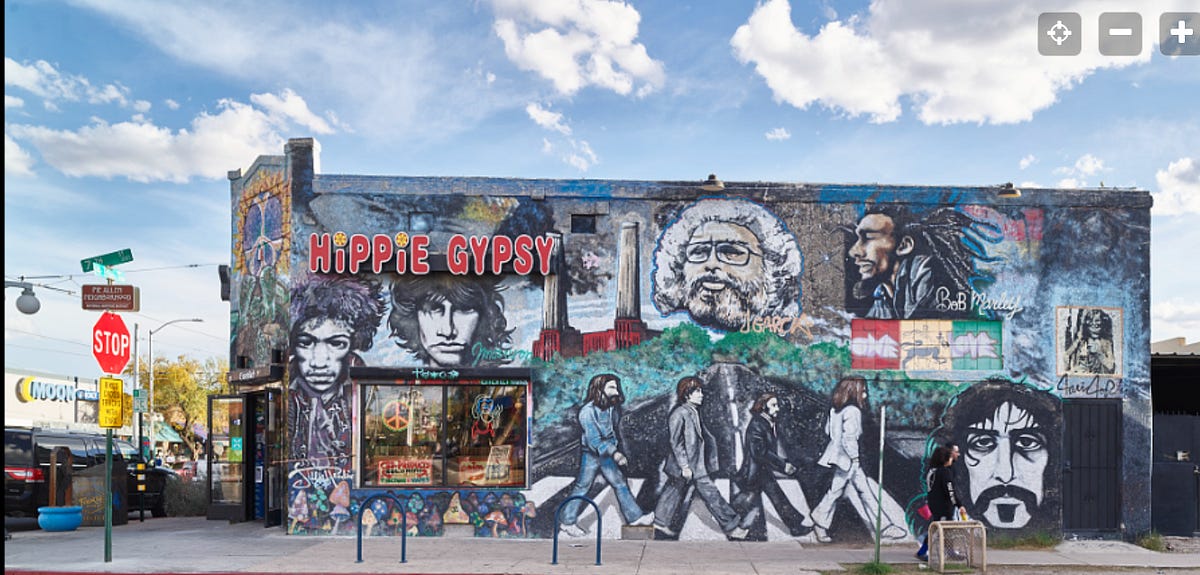
THE 60s — ATLANTIS RISING
I’m old. This means I have a lot of time to mull things over, and I find myself mulling over what I have learned in various life-stages.
I admire Socrates and have always felt drawn to his ideas about the worthlessness of an unexamined life — hence my desire to examine. Socrates (469–399 BCE) was a strange and interesting fellow — one of the few individuals that thought-leaders say shaped our intellectual development so significantly that without him, our culture and attitudes might be profoundly different.
Socrates is said to have been a really ugly guy. He had a snubbed, tilted up nose, and his bulgy eyes not only stuck out, they were canted to the side. Think lizard. He’s often portrayed with a potbelly to end all potbellys — it’s not an auspicious description of a guy who lived in a culture that valued physical attractiveness above most other things. This could be why he immersed himself in philosophy and deep thoughts, both solitary pursuits.
He had two wives, Xanthippe and Myrto — maybe both at the same time — which could account, perhaps, for his refusal to escape from prison later on. I realize I’m way off on a tangent, so let’s get to how his thinking caused me to write this story.
Socrates and my examined life
Old Soc never shut up about knowing thyself. He insisted that the unexamined life is not worth living. Immanuel Kant (Metaphysics of Morals, 1797) describes “know thyself” as an ethical admonishment to dig into our hearts so we understand what we want (our will), why we do things (our motivation), what we should be doing (our duty), and how we can blend our wills with our duties.
I’m good with that. But I am quite aware that my wants and my will often preside over my dedication to duty. In examining my life, it’s really easy to see where that has caused challenges.
Being a (flower) child of the 1960s and 1970s, my free-form, erratic, mildly anti-establishment rebelliousness had a significant impact on my adulthood. I rather liked the self I developed, but that path wasn’t without difficulties.
Examining my formative years
I grew up in a large Roman Catholic, Polish/German, middle class Chicago family. My social network consisted of five siblings, a million cousins, two grandmothers, and a variety of aunts and uncles. These folks populated every holiday, social event, and various vacation outings.
Appropriately uniformed and thoroughly repressed, I went to a Catholic school. Rest assured, I toed the line, said my prayers, went to confession, did my penance(s), feared Sister Mary StinkEye, and did precisely what I was told. I was surrogate mother to my siblings from the time I was seven, as my mom was not up to the task.
Both of my parents were overwhelmed by life in general and by parenting six kids. My mother was almost always pregnant or postnatal.
Famous quote from my childhood: “You just wait till your father comes home, young lady, and he’ll give you what for.”
At age 10, when I was in the fourth grade, my parents transplanted us to a post-war subdivision of upscale(ish) lookalike houses in a subdivision in a far Northwest suburb, and I ended up in (horrors!) public school. My parents probably saw this as the beginning of the end of me as a docile, well-behaved child.
I spent the next four years observing my new set of peers, figuring out their strategies, and plotting my escape from repression. I still followed rules — my dad had a wicked temper and wielded a belt as if the state of the universe depended on his children being perfect.
My parents saw symptoms that I was brewing something suspicious in my personality and conduct. They couldn’t lock me in a tiny room under the stairs like Harry Potter’s uncle did, but they were on high alert. It was likely my growing penchant for talking back that got their attention. My occasional snotty quips did nothing to enhance their view of me.
After I graduated eighth grade, they enrolled me in the Catholic all-girls high school as a precaution — an ounce of prevention, so to speak.
On the school bus, we were required to wear a dark blue uniform, crisp white regulation blouse, white socks, black and white saddle shoes (impeccably clean), and white gloves. I complied, but barely. And I rolled the waist of my skirt up so my knees were visible. When Sister Mary Fussbudget made us kneel at the school door so she could verify that every skirt touched the floor, I was pulled out of line regularly. Once, I drew a tiny peace sign on my white glove with black indelible ink.
Another time, in religion class, the nun told us, “Be aware that a lay person may baptize someone in an emergency.” (yeah, that would be my first inclination in a life and death situation.)
She went on, “You could use any liquid available, even Coca Cola.”
My unstoppable wit kicked in, and I spoke out without bothering to raise my hand or get permission to speak. “Yeah,” I quipped, “Get that refreshing new feeling with Coke!”
You could have heard a pin drop. No laughter. The class looked aghast and alarmed. The nun seemed to expand to eight feet tall, stalked over to my desk, and rapped me on the head with her pointer.
I got kicked out of Sacred Heart of Mary at the end of the first quarter of freshman year.
Back to public school, and I did four years without drugs, cigarettes, alcohol, or sex; otherwise, I probably wouldn’t be alive today since my parents would have offed me. I skirted the edges of all those behaviors, though, pushing boundaries to the max — just exploring.
Around high school, I began examining my life as Socrates had advised, hoping to find a way to feel better. I learned that being a “good girl” has some slight advantages and can ward off corporal punishment sometimes, but I felt stifled, bored, and unfulfilled.
My discoveries in public high school
I found out I could be pretty amusing. I discovered that boys were interested in me for various reasons. I figured out that I related better to boys than I did to girls, and I learned that I was quite an intelligent and creative person. I began to express myself through writing.
The second half of freshman year, I joined the staff of the yearbook and the school newspaper because people liked to read stuff I wrote, and that made me feel special and valid. In these endeavors, I was allowed, nay, encouraged to practice my slightly caustic humor to fuel controversy, since controversy attracts reader attention.
I began to act out — not enough to cause retribution at home, but enough to get more attention at school. I loved it. For example, the newspaper staff hung out in a small room dubbed the “journalism office.” Our faculty advisor didn’t give half a hoot what we did in there — he spent a lot of time in the teacher’s lounge or off-campus smoking cigarettes.
We wrote ourselves hall passes and hid in that room during assemblies, gym class, fire drills, and any other time we didn’t feel like conforming.
One afternoon, we learned that rubber cement was an amazing diversion. Since we pasted up the newspaper with actual scissors and glue, we always had quart cans of rubber cement. We drooled a long, thin stream of the sticky stuff out the third floor window, allowing it to congeal as it made its way to the lawn below. Picture it, a three-story string of translucent goo hanging in the air. We slapped a sign on the window. “Snot,” it read.
Possibly the only other time I laughed that hard was the first time I smoked weed while watching Mod Squad on TV.
For the rest of high school, my away-from-home persona morphed into a flirty, funny, mischievous rebel. I began to thrive, seeing myself as a unique person that others were drawn to. I attended all the obligatory events, games, and dances. I had boy friends, guy friends, and regular friends. I cultivated my “outside the box” life.
Parallel to my school “universe,” I hung around the local community newspaper office where my BFF’s mother had a significant job. I watched, listened, and contemplated everything going on in there.
At some point, the community editor paid me something like 3 cents a column inch to compile a weekly “neighbors” column. That’s the small-town tradition of writing about Joey Smith going into the Army, Suzy Sunshine winning a baton twirling trophy, or Mrs. Miller’s Aunt Sophie arriving to spend Christmas with the family. Wildly exciting.
The paper, a hundred-year-old community weekly, was on the edge of becoming an important Chicago metropolitan daily, as it is today. Their writers, photogs, editors, and management evolved from old school traditionalists to progressive up-and-comers. Heady stuff, hanging out with them.
At 16, I sucked up my courage, approached the hip managing editor, and proposed that he hire me to write and manage a two-page weekly section for teens. To my shock and awe, he agreed. My career was born — I had learned to advocate for myself and trust my own worth.
I was two people for a while. At home, I had my toes firmly stuck to my dad’s line in the sand. Never crossed it. Never questioned the parents. Never gave any sign that I was anything but docile.
Well, mostly. My back-talking was becoming quite well-established and energetic. But I had learned to move out of slapping range faster than an Australian tiger beetle.
And then came college.
I became unstoppable
As my senior year unfolded, I grew bold. I announced at home that I would not attend the coming graduation ceremony. I orated about the ridiculousness of status events, the importance of my personal freedom, and reserving an 18-year-old’s right to do as I pleased.
“You wanna bet?” My father’s reply.
Therefore, on June 4, 1967, wearing a billowy gold robe and a black mortarboard, I took 200 measured, rehearsed steps from the entrance to our school gym to the stage ahead, crossed the stage looking neither left nor right, shook hands with Dr. Jenness, and received my diploma. Pomp and Circumstance droned in the background. It was 200 degrees F in that space, where 750 classmates and 1500 parents dripped sweat and couldn’t wait to get out. It was the largest class ever graduated in our Chicago suburb — we were the baby boomers.
Finally the parade ended, and we were admonished to restrain ourselves from throwing those mortarboards under penalty of who-knows-what. I immediately sailed my hat into the air, hitched up my robe, and ran.
And then what happened?
On September 3, 1967, officially a Northern Illinois University student, I stood at the door of Neptune Hall, my assigned dorm. I hardly recognized myself in the glass as I admired my garb.
Faded bell-bottomed blue jeans meticulously fringed at the cuffs by way of pulling horizontal threads with a heavy needle. I had drawn all kinds of pop-culture (which I thought were very anti-establishment) icons all over the jeans.
A white peasant blouse, fairly see-through, heavily embroidered in bright colors, with long, floppy sleeves that covered part of my hands. I made sure my cleavage was highly visible — it had become my most prized attribute. A rust colored buckskin jacket with too much fringe hanging off the sleeves from shoulder to wrist. I had inked a peace sign on the left shoulder.
The pièce de résistance — a leather Aussie slouch hat too big for my face. I was the shit.
There was no resemblance to the repressed high school senior from the previous June. I had stopped at a gas station on the drive to school and changed out of my conservative plaid skirt and sweater, which I tossed in the trash. It should be noted that I never looked back, and my edgy attitude grew ingrained and refined as I became me.
College was entertaining, and I still had great grades. I wanted to be a writer — the young Bahbwa Walters was my role model. Education mattered. My favorite class was an art history survey course taught by Ben Mahmoud, a sexy, mysterious, artsy, young hipster whose body of work included a series of phallic mushroom paintings. Symbolic? Sure — sex, drugs, and rock and roll. Not that I had experienced the first two. Yet.
I bonded with a rag-tag crew of hippie wannabes — a gay guy with hair to his butt, another guy we dubbed Mother, a flock of pouty flower-children girls in maxi-dresses and long hair styled with a hot iron or wrapped wet around juice cans to remove any hint of curl, wave, or bend. We draped beads on every body part that could hold them. We clinked when we danced.
We burned our bras, joined NOW, and protested anything that struck us as objectionable. I felt as if I occupied another universe and figured out day-by-day that my parents’ lives were completely unappealing to me. I realized I didn’t want to be like them. At all. Ever. Don’t trust anyone over thirty.
When my tribe and I talked, it went like this:
Make love, not war. Don’t let the man keep you down. Live and let die. Hell no, we won’t go. Pigs! If you can’t be with the one you love, love the one you’re with. Acid rock tripping free love anti-establishment like wow man flee THE MAN free your mind trippy groovy psychedelic farm out…
We were firmly, adamantly against political and social orthodoxy, the not-war in Vietnam, conforming to anything (yes, I know we were conforming to a whole lot of things), commercialism, marriage, and practically every societal norm. We hated politics and authority. Some of us moved to Canada or Haight Ashbury. We painted and pasted the chicken-foot peace symbol everywhere.
So what did we want? Peace, free love, self-expression, classlessness, and a gentle, nondoctrine ideology that favored what we saw as individual expression and freedom. We wanted to stick daisies in the barrels of guns. I was all in and having a blast — and we had the best music in the history of mankind.
When I wasn’t in classes, I worked at the hundred-year-old Elgin Clock Company factory. On the assembly line, I fixed four screws into a small brass mechanism, dab black gunk called glyp onto the screws, and passed that assembled unit to the next station. I did it for entire shifts, with my transistor radio set to WLS rock radio and an earphone in my ear. The earphone later gave birth to earbuds, but we used only one. Radio was monaural.
There was, in the middle of the factory floor, a rabbit hutch-looking structure consisting of a geometric, segmented frame with many sections of thick glass panes. At four foot intervals down both long sides of this 20 foot by 40 inch enclosure, there were 8-inch circular openings into which workers inserted their arms. Inside each opening was a heavy rubberized canvas glove. Arms ensconced in these gloves, workers assembled another production unit.
That workstation became significant, but first, I should tell you that when we arrived at work each shift, there were armed National Guardsmen at the always locked door. They checked IDs and allowed one person at a time through the door. You couldn’t leave without checking out and having a guard unlock the door. I often wondered why, but it was the era of demonstrations and protests.
Well, one day, a co-worker picked up a finished assembly that had come out of the hutch, and it slipped out of his hands. I was mindlessly screwing in screws, but I felt a rush of air and looked up. The room cleared out. Everyone but me dove for the exits as the item fell to the floor.
Turned out Elgin Clock made bomb fuse assemblies destined for the war effort. The company never talked about this — people learned via the grapevine. I, content to savor my music while glypping screws, had no clue until the day that fuse assembly dropped and people scattered.
My two hippie friends and I realized we were fueling the immoral war, but then we considered the decent bread we were paid to do the work. We worked for a few more months until management determined that our reject rate was 95%. We were summarily fired. A few of us picketed the plant, thinking we’d force them to stop supporting US aggression. No one cared. Power to the people.
The 1967 Democratic Convention dampened my freedom of expression ideals — I was there in the city for the riots, but being a suburban kid with little world experience, I stayed on the very far fringe of the action and booked like my ass was on fire when it became obvious that things were going south. Events like the civil rights battles, Jackson State, and Kent State all deeply moved and intimidated me. But time passed, and life became slightly less worrisome.
The third decade
I finished college, having moved from NIU to the University of Chicago Circle Campus. I’m sure I’m remembering incorrectly, but it seems like I wore the outfit I described above for four years as a symbol of who I truly believed I was. Lots of my high school friends didn’t return from Vietnam. As happens, my tribe thinned out as people moved on to other places and interests.
All things change. As I entered my 20s, I woke to the reality of making a living, acquiring a place to live, and feeding myself. In those days, women were not superstars in journalism; such jobs were scarce and underpaid. I dabbled in newspaper writing for a while before I fell into an opportunity to manage a training division of a national home-study school. An establishment job to the max.
Remember those matchbook ads inviting you to “draw this picture” of a person’s head, submit it, and qualify to become a famous artist? That company hired me and paid me a tidy sum to travel the country, open sales offices, train staff, and manage field offices from corporate headquarters.
Man, I kicked ass. I was smart, energetic, and an inventive problem solver. I abandoned my hippie persona and immersed myself in corporate America. Call me a sellout.
Men twice and three times my age reported to me — their careers depended on my review of their performance. This was almost unheard of for a woman in her early 20s — I was the only female on the management team. I felt awesomely cool, with a significant income and a lot of power. Before anyone thought of the Me Too Movement, I was the darling of three 40-something year-old brothers who owned the place. They doted on me. I grew a healthy ego, a ton of self-esteem, and a burgeoning recognition of how to leverage feminine wiles.
And 50 months later, I was burned out, stressed to the max, and depressed. All I thought about was getting away, but I had no desire to get married. No inkling to become a mother. No thought of pushing through and anchoring my nose to the grindstone for much longer.
One day, it came to pass that an older friend told me she had once become fed up with her life and decided to bail. She ran away to Greece and had an amazing time. I listened, exclaimed that I couldn’t possibly be that irresponsible, and dropped the idea.
Three weeks later, I had sold everything I could bear to part with, moved out of my apartment, gathered every nickel I could leverage, and quit my job. With coaching from my friend, I purchased a one-way ticket to Barcelona on a Yugoslavian freight ship that carried tons of cargo and a few passengers periodically across the Atlantic from Bayonne, NJ, to Barcelona.
The Chicago travel agent who arranged these excursions was a 5 foot-tall, 83 year-old man lurking in an office the size of a walk-in closet. The ticket cost $295 and included all meals, a cabin below decks, and ground transportation for exploring all ports of call. The voyage would take three months. I fully believed I would stay in Europe forever.
Long, long story short. Without making a single plan, I made my way to Bayonne on an American Airlines 747. I was reading Jonathan Segal’s Love Story and waiting for takeoff when a man sat down next to me. I glanced up, stunned to see my boss from the home study school.
“Um, Dale?” I said, at a total loss for words.
Words tumbled out of his mouth, and my astonishment grew, compounded, and turned to terribly uncomfortable confusion. He told me he figured out what plane I would be on and bought a ticket so he could declare his passionate love for me. Say what?
In a torrent, he explained that he loved me from the first time he laid eyes on me but never had the courage to tell me. Now this may seem very flattering, but the guy was closer to 50 than 40, was of zero interest to me romantically, and had a wife. And the love of my life to date, who would later become my husband, was slated to meet me in Spain in three months.
The most coherent thing I said for the first half hour was, “Um. But. Huh?”
The diatribe continued. He wanted me to turn around and fly back to Chicago with him, where he would divorce his wife and marry me. This idea threw me for a loop. I felt confused, embarrassed, naive, and awkward. I stammered out something inane — a definite negatory — and we sat silently for the rest of the trip. After arriving in Bayonne, he went off on a flight back to Chicago.
I made my way to the port, boarded the ship, and spent almost two years backpacking my way across southern Europe, crashing where I could and encountering all sorts of adventures. I dropped out of my corporate life and back into my hippie persona, acting exactly the way one would expect a counterculture rebel to behave. It got dicey sometimes, I won’t lie, but I loved every adventure.
I learned that the world is far older than the country I grew up in and that people are not much different, whether they are democratic, socialist, or tribal. I walked on Bedouin soil and wore a striped desert robe called a thobe. I saw Greek temples and Spanish crystal caves. I slept in odd places, like the tiny cabin of a fishing boat. I got to know myself and what mattered to me.
I figured out that America has advantages that other nations don’t, and I missed it. It became obvious to me that I liked charting my own course and following what my inner voice told me was the right thing to do. If there were consequences, I could handle them.
That was fifty years ago, but I remember each moment as if it happened yesterday. I know I had to reach deep into myself for resources that enabled me to find my way, stay relatively safe, and live by the seat of my pants. When I flew back home from Athens to New York, I had been on three continents and had explored eight or nine countries. I had 37 cents, half a pack of Greek cigarettes, no home, few clothes, and no prospects.
It took a fair while for me to reestablish my life when I got back, though I married my high school boyfriend two weeks after I touched down in New York. If I had it all to do over, nothing on this planet could make me do anything differently.
I’m an old lady, but in my soul, I’m the flower child who still believes what I learned by examining my life’s first three decades, thanks to Socrates’s advice. John Lennon said that life is what happens while you are busy making other plans. I’ve always been satisfied with the time when I didn’t worry too much about plans.
If you ever think about creating revenue streams with your writing, hop over to Pen2Profit and learn how that’s done without losing your soul. There’s free help and there’s premium content over there you can’t get anywhere else.
Our backgrounds are remarkably similar but I stayed on the straight and narrow longer while you veered off earlier. We all regularly met in yearbook writers offices but no one ever did anything treacherous! I never would have had the nerve to backpack alone through Europe at such an early age. My renegade spirit didn't appear until much later (moving from Wisconsin to Boston for a job was a big deal) even though we graduated high school the same year. Interesting parallels. Interesting divergences.