

Transcending Boundaries: A Century of Universal Appeal for Gibran’s The Prophet
If you’ve read it, you know—if you haven’t, you should

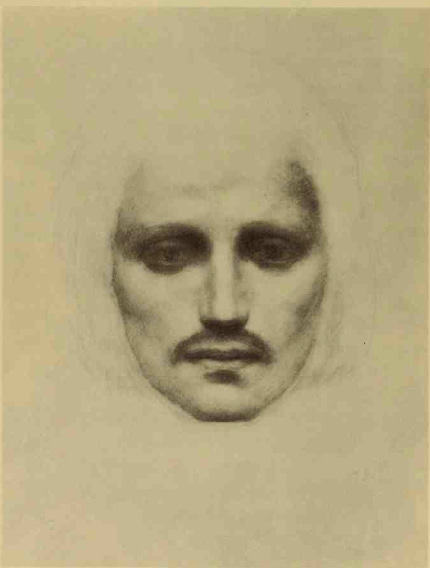
The wisdom and insights that live in The Prophet go beyond any specific culture, religion, geography, or time period. Gibran Kahlil GIbran’s work touches on universally relatable fundamental human experiences and emotions—he speaks to me, and he speaks to you regardless of your personal beliefs.
This little book, easy to read easy to hold, has resonated with readers around the world since its publication on September 23, 1923. For a century, its profound teachings and beautiful prose have stood the test of time, attracting readers from multiple generations and cultures. While most books’ sales diminish over time, it has gained an ever-increasing global readership and has been translated into about 100 languages. It has never been advertised or marketed; The Prophet’s popularity is fueled by word-of-mouth recommendations, its beautiful message, and its inclusion in various educational curricula and self-help reading lists. It surprised me to find that this Lebanese-born poet, who emigrated to Boston as a child, has been called the third most-read poet—behind Shakespeare and Laozi.
We’re talking about one of the best-selling books of all time; Swann Galleries estimates sales worldwide of more than 100 million copies. The book has never been out of print.
Why people call The Prophet a prized possession
Someone, I don’t remember who, gave me my copy in 1965, the opening of a decade of political, military, social, and economic turmoil that shook the world to its roots and resulted in wide sweeping alterations to our culture.
I was always in love with words. I swooned over song lyrics like, “As I watch the drops of rain weave their weary paths and die, I know that I am like the rain, there but for the grace of you go I.”
So I found Gibran’s writing style poetic and eloquent, creating a captivating and magical read. Then 15 years old, I constantly scanned my experiences for meaning and direction, and this little book’s chapters on everything I knew I had to face as an adult resonated like the deepest tones of a gong.
Though I probably couldn’t have articulated my feelings, I found solace, inspiration, and a sense of what purpose looks like. And I wasn’t alone. By the time I was at the University of Illinois, the book was an emblem in my circle. The Prophet is not a lengthy or complex work, so it feels accessible. People drop into its pages for a quick read and revisit its wisdom easily.
We were truly immersed in the counterculture, turning our backs on just about everything that reeked (to us) of the stale establishment. We stopped going to church, and many of us looked into Wicca, Buddhism, and other Eastern philosophies. (Cue Ravi Shankar). When we found Kahlil’s church-free, inclusive spiritualism, free of thou-shalt-nots and judgment, we were right there with him.
Interestingly, if you look into periods of dissatisfaction and discontent since the 1920s, there’s a marked uptick in the book’s popularity every time. It’s not hard to intuit that we’re due for another bout of robust sales of The Prophet any day now.
A look at the magical and lyrical content
The storyline opens with a wise man, Al-Mustafa, about to depart his home of 12 years for his (imaginary) city of origin, Orphalese. Al-Mustafa, not unlike Siddhartha Gautama, is bent on building a better society in which people can lead a truthful life. A crowd gathers as he approaches a ship, and Almitra, a seeress, employs him to answer the ultimate questions of life. For me, the ship was a metaphor for death, and Al-Mustafa was leaving a legacy for his followers.
The last line is this: “A little while, a moment of rest upon the wind, and another woman shall bear me.”
We can find five major universal truths in the story. I’ll give you a brief look at them.
*Humans always seek wisdom. We have always learned about life through teachers and preachers. The people in the book know that, and so they ask him to share his truths so they can live better lives and pass the wisdom on. It’s interesting to me that experts think Gibran drew inspiration from Blake, Whitman, and Nietzsche.
There is high value in life and in love. But we’re continuously puzzled by both. Al-Mustafa recommends we follow love, though it may be painful. We learn that true love and life are not only about pleasure; pain makes the pleasure more significant, and love requires balance.
The glorification of all humans. The Prophet shines a beautiful light on self-preservation, immortality, and the god-self present in every person. Al-Mustafa’s lessons don’t neglect social justice and the nature of crime and punishment
Joy and sorrow—Gibran realizes that joy is inseparable from sorrow. He shows over and over how each heightens or diminishes the balance of the other.
The importance of freedom—Probably my favorite theme is liberation from the chains of social norms. He tells us individuals and nations all seek freedom. We’ll sacrifice anything for more of it. Just as the reader is pulled into complete agreement with that idea, Gibran reminds us that freedom may actually create its own prison.
Links to sample passages (public domain)—skip down to “The Prophet Revisited” if you are short of time
The Coming of the Ship—And ever has it been that love knows not its own depth until the hour of separation.
On Love - But if in your fear you would seek only love’s peace and love’s pleasure, Then it is better for you that you cover your nakedness and pass out of love’s threshing-floor, Into the seasonless world where you shall laugh, but not all of your laughter, and weep, but not all of your tears.
On Marriage -Aye, you shall be together even in the silent memory of God. But let there be spaces in your togetherness, And let the winds of the heavens dance between you.
On Children — Your children are not your children they are the sons and daughters of life’s yearning for itself. And though they are with you they do not belong to you.
On Giving — You give but little when you give of your possessions. It is when you give of yourself that you truly give.
On Eating and Drinking—Would that you could live on the fragrance of the earth, and like an air plant, be sustained by the light. But since you must kill to eat, and rob the newly born of its mother’s milk to quench your thirst, let it then be an act of worship.
On Work —It is to sow seeds with tenderness and reap the harvest with joy
On Joy and Sorrow — Together they come, and when one sits alone with you at your board, remember that the other is asleep upon your bed.
On Buying and Selling— It is in exchanging the gifts of the earth that you shall find abundance and be satisfied. Yet unless the exchange be in love and kindly justice, it will but lead some to greed and others to hunger.
On Crime and Punishment — And you who would understand justice, how shall you unless you look upon all deeds in the fullness of light?
On Freedom— And thus your freedom, when it loses its fetters, becomes itself the fetter of a greater freedom.
On Self-Knowledge --The soul unfolds itself, like a lotus of countless petals.
On Teaching --No man can reveal to you aught but that which already lies half asleep in the dawning of your knowledge.
On-Time — And let today embrace the past with remembrance and the future with longing.
On Good and Evil --You are good in countless ways, and you are not evil when you are not good, you are only loitering and sluggard.
On Beauty --Beauty is eternity gazing at itself in a mirror. But you are eternity and you are the mirror.
On Death --If you would indeed behold the spirit of death, open your heart wide unto the body of life. For life and death are one, even as the river and the sea are one.
The Prophet revisited
My relationship with The Prophet began in the ‘60s when we felt judged, repressed, tried, and convicted of something, but we didn’t know what. Our heroes and myths shifted from parental traditions to things we could feel we owned. We dressed funny. We did things to our hair, our language, and our music. We endured murdered heroes, Viet Nam, the Civil Rights Movement, women’s struggles, and political strife that culminated in the 1968 Democratic Convention. Steve Jobs’s fascination with Buddhism came of the period.
I travelled all over the world with Al-Mustafa in my suitcase, and when I got pregnant the first time, his words about children put tears in my eyes. I didn’t want anyone to read Bible verses at my wedding. When my kids were baptized, Kahlil made more sense to me than the Catholic baptism ceremony did.
I still love the way I feel when I read that book. Once, I took a calligraphy pen and copied the entire text into a scrapbook, then illustrated it with pictures cut from magazines and greeting cards. The project took six months because there was no artificial intelligence, and computers were the size of living rooms.
These days, you can find podcasts, posters, books, derivative books, essays, shirts, films, and a cartoon feature. Gibran’s book is in the public domain, so it can be used, quoted, adapted, or rewritten without permission. In our world of unrest, strife, and discord, who knows where and how this lyrical work will find new fans? If you haven’t read it, put aside your daily routine, sit quietly in a place you love, and treat yourself to a slow, gentle, thorough reading. Let the words sink in and resonate. If you’ve read it, do it again.
Sources
The Prophet by Kahlil Gibran
The Wanderer by Kahlil Gibran
This book has a way of finding people at exactly the right moment in life. The ideas feel just as relevant now as they must have a century ago. It’s one of those rare works people keep returning to over the years.